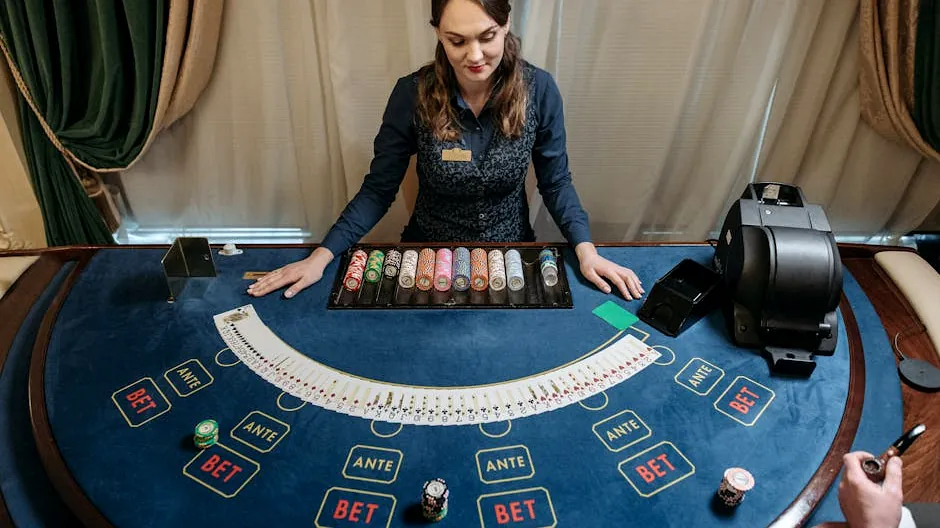
Virginia’s Senate Bill 756 has cleared a major legislative hurdle and could let Fairfax County host a casino — but the Senate’s unusual allowance for a temporary casino to operate before a local referendum is the provision driving the dispute. The measure still requires a local vote and includes a July 1, 2029 deadline for a successful referendum; it does not guarantee a permanent casino will open without voter approval.
What SB 756 mandates for any Fairfax casino
The bill conditions a Fairfax casino on being part of a mixed-use project of at least 1.5 million square feet, with elements such as a hotel, conference center, or concert venue and a requirement that the developer provide funding, land, or construction support for a nearby public safety facility. Earlier proposals that limited the site to Tysons or required union labor and higher licensing fees were stripped during negotiations, so those specifics are not in the current text.
SB 756 also prescribes a revenue allocation that has become a core complaint: roughly 70% of statewide gaming tax revenue would go to the Commonwealth and about 30% to Fairfax County. That split is a principal reason Fairfax Board of Supervisors Chairman Jeff McKay and other local officials say they may press Governor Abigail Spanberger to veto the bill unless the county’s share improves.
How the temporary casino provision works and why it matters
The Senate-approved language permits a temporary casino in Fairfax with up to a 150,000-square-foot gaming floor — comparable in scale to MGM National Harbor — to open before a local referendum is held. Under the bill’s mechanics, a temporary operation would be required to close if voters later reject a permanent casino, and the statute expires for Fairfax if no successful referendum occurs by July 1, 2029.
Critics including the Tysons Stakeholders Alliance, No NoVA Casino, and members of the Fairfax Board view the temporary option as a way to start gaming operations ahead of community approval. Supporters argue temporary operations provide revenue quickly; opponents counter that the provision undermines local control and circumvents typical local-government consent processes.
Where House and Senate still differ (and what that means)
| Feature | House-passed version | Senate-approved version | Practical consequence |
|---|---|---|---|
| Temporary casino before referendum | Did not include a pre-referendum temporary operation | Allows temporary casino up to 150,000 sq ft | If Senate language stays, gaming could begin before voters decide; if House language prevails, voters decide first. |
| Mixed-use size and amenities | Requires mixed-use project, 1.5M+ sq ft | Same 1.5M+ sq ft requirement | Sets a high bar favoring large developers able to deliver hotels/conference venues and public-safety contributions. |
| Revenue split | State ~70% / Fairfax ~30% | State ~70% / Fairfax ~30% | County officials say the 70/30 split is insufficient and a likely veto trigger without changes. |
| Referendum timing | Local referendum required before permanent approval | Same; plus temporary-op before referendum | Both versions keep the ultimate choice with voters, but the Senate route lets a temporary operator run until a referendum completes (or the law expires in 2029). |
Deciding whether to push forward, pause, or demand changes
For Fairfax officials and residents weighing support, focus on three concrete thresholds: (1) revenue share — if the county’s take remains near 30% and McKay presses the governor, expect a veto fight; (2) local control — the temporary-casino clause is a signal-stop for groups prioritizing pre-vote community consent; and (3) developer capacity — only firms that can assemble 1.5 million square feet and contribute to a public-safety facility are realistic contenders.
If you’re a developer, the bill creates an actionable pathway only if you can meet the size, mixed-use, and public-safety requirements and are willing to accept the 70/30 revenue framework unless that changes at reconciliation. If you’re a community advocate, the single practical lever before a casino opens is the referendum outcome and the Board of Supervisors’ public stance; Chairman Jeff McKay’s ability to influence a veto or secure renegotiation of the revenue split will materially affect the timeline and likelihood of a permanent project.

Short Q&A
Will a casino open in Fairfax without a public vote? No — a permanent casino requires a successful local referendum. The misreading that the bill guarantees a permanent casino without voter approval is incorrect; however, the Senate language would permit a temporary operation before the referendum.
What is the deadline for local approval? The bill sets July 1, 2029 as the cutoff: if Fairfax hasn’t passed a referendum authorizing gaming by then, the authorization for the county expires.
Who decides the final wording? The House and Senate must reconcile their versions of SB 756 in a conference; the reconciled bill then goes to Governor Abigail Spanberger, who can sign, veto, or seek changes.
